Author: Team Editors admin

  • Gold loses its luster as a safe haven amid expectations constantly decline in 2014

    Gold loses its luster as a safe haven amid expectations constantly decline in 2014

    Gold loses its luster as a safe haven amid expectations constantly decline in 2014

    Faced world gold prices strong pressure more than a third of its value over the past year of 2013, and for the first time since the outbreak of the global financial crisis at a time when turning the direction of investors to assets more profitable, after the failure of gold to maintain its status as a safe haven for investment.

    At the time that the new year will reduce the policy of quantitative easing and low levels of inflation in the United States. With hedge funds reduced bets from high gold in the new year on the back of expectations the Fed to reduce the quantitative easing policies.

    Stimulus plan

    Gold prices fell by about 27.4% over the past year due to pricing pre-Federal Reserve’s decision to withdraw plans to stimulate since the beginning of 2013 on the back of improved economic data next to the environment of zero interest rates and inflationary pressures on the global level in the last year in exchange for the improved performance of stock markets, high-yield , prompting investors to get out of the gold markets and enter into other markets.

    Gold has achieved in the last day of trading last year, the worst annual decline since three decades while longer last year, the first decline after 12 years of ups cascade, pointing out that the price of gold has achieved the highest level in 2013 at $ 1,679.40 per ounce last January while it was lowest level at $ 1180.15 an ounce in June of the same year.

    A safe haven

    Gold prices are moving near the level of support at $ 1,180 an ounce, which in the case of breaking it down prices will continue to fall to low levels.

    Gold prices are going in a downward trend over the medium term, which could push investors to get out of the gold markets and enter into other markets, after losing its luster as a safe haven for investors with better indicators of the U.S. economy which drives investors to come back to invest in fixed income instruments of America.

    Beginning of correct

    Gold failed over the past year in the rebound from the downward trend that began in October 2012 after a break of the rising channel , which lasted about 12 years and that took prices to the highest level at a historic $ 1,920.92 an ounce in September 2011 .

    Last year, it may be the start toward correcting this upward trend , especially that gold will not be able to close above the price at the beginning of the year to open $ 1,674.25 an ounce after losing the factors that were behind this increase over the previous twelve years .

    Gold lost about 25% of its value over the past year , after turning the trend to bearish market since April, while the improved U.S. economic data which increased speculation in the markets that the Fed would move to reduce the quantitative easing policies by the end of the year and then this led to a decline in the attractiveness of gold and was a key feature as a hedge against inflation .

    3 reasons behind the decline

    There are many reasons that led to lower prices for gold for the first time after 12 years of ups cascade including the environment of zero interest rates applied by the major central banks , which was supposed to support the gold markets as it supported the stock and bond markets , however, the significant improvement of economic data at the global level was one of the key factors behind reducing the attractiveness of the yellow metal as a safe haven for investment at a time of increased hopes that the global economy may be coming from out of the crisis .

    Among the factors that affected the gold price data the third quarter of 2013 , which showed a rapid growth of the Chinese economy during the year , as well as for the U.S. economy , which achieved the best pace of growth since the first quarter of 2012, and in Britain accelerated growth within the top level for the past three years while the euro zone has achieved growth in the second quarter and graduated from the recession that lasted six quarters in a row. Thus , instead of heading to the expansion of the central banks in monetary policy to support growth as it preferred to maintain the status of the current monetary policy , while others alluded to the possibility of starting to reduce the quantitative easing policies in the light of improved economic performance .

    European Central Bank , for example, William is heading to the expansion of the third wave of cheap loans or activation of the European bond-buying program , while the Bank of England preferred to retain the asset purchase program as is , without changing the value of 375 billion pounds . As for the Fed decided last December to begin reducing the policy of quantitative easing and gradually until it is fully completed by the end of 2014 . And began to cut about 10 billion U.S. dollars as a start to drop to 75 billion dollars.

    Hint Federal withdraw quantitative easing policies in 2013 led to the survival of non- gold assets or bonds a safe haven where the process of withdrawing mitigation policies will lead to a decline in their prices dramatically . This condition is known as the « activate the risks and hazards stop » , where during the times when the risk is low risk theory activate and stop the risk that states that investors accept the high -risk investments .

    This is what happened , as investors turned to the stock markets for high-yield , which had already risen to historic levels on the back of improved performance of the major economies in terms of

    On the other hand the growth of corporate profits , particularly in the technology sector and the banking sector is also President of the causes of the financial crisis five years ago

    « Gold On the contrary the engine head of a demand for it because of the trend of central banks to reduce the monetary policy , especially that of the U.S. Federal Reserve pumped trillions of dollars since 2008 to address the global financial crisis »

    Exchange rate and commodity markets

    Given the movements of the U.S. dollar , we find that there is a correlation inverse between the dollar and gold as well as goods resident in U.S. dollars , while the relationship was strong in the first half of last year when the dollar index to reach its peak in June, at 83.60 In contrast, gold prices dropped to the lowest levels in the same year, to $ 1,180.64 an ounce. And the beginning of the second half of the year seemed to weaken the relationship at a time when the price of gold has moved and the dollar within a downward trend starting from September

    Oil markets have been one of the key factors that supported gold prices, but with the decline in oil prices to near the price of the year at the start of dealings levels of $ 91.77 last November although it has risen again on the levels of $ 97.00 at the end of the year. But the overall failure of the oil in the support price of gold in any form during the year.

    Future Vision

    Gold corrected about 38.2% on a scale Fibonacci retracement of the uptrend that lasted 12 years in a row , which started at $ 251.70 an ounce in 1999 , pointing out that gold broke the neckline of the head and shoulders in the short term target levels of $ 1180.00 an ounce.

    Gold prices broke the support area on the level of corrective 23.6% on Fibonacci of the first attempt to face areas of support is very strong at the correctional level of 38.2 % , this is taking into account the role of the weak who played correctional level of 50% on the same scale corresponding to the levels of $ 1085.00 an ounce, noting that the state has a negative acceleration takes gold prices to the levels of support $ 889.00 per ounce, which corresponds to 61.8% correctional level on the Fibonacci and so in the medium term .
  • Gold jumps in thin trade However expectations bleak

    Gold jumps in thin trade However expectations bleak

    Gold jumps in thin trade However expectations bleak

    Gold jumped on Thursday on buying in the spot market after prices fell to their lowest level in six months , but investors are still not excited because of the improved global economic outlook and speculation the imminent termination of the U.S. monetary stimulus .

    Gold and incline of 28 percent in 2013 Msdla the curtain on a rally that lasted 12 years, with the announcement of the Federal Reserve ( the U.S. central bank ) announced plans to end the policy of monetary easing this month by reducing the monthly bond purchases ten billion dollars to 75 billion dollars.

    The quantitative easing helped lift the price of gold in recent years because of the pressure on long term interest rates and fueled fears of inflation.

    Rose spot price of gold to its highest level in two weeks , recording 1228.10 dollars per ounce in early trading , rose 1.1 percent by 1118 GMT to 1219.04 dollars. The metal dropped to the lowest price since June 28, when the record of $ 1184.50 an ounce on Tuesday .

    Silver rose 3.2 percent to 19.94 dollars an ounce and the metal fell 36 percent in 2013 , the worst annual performance since at least 1982 .

    And platinum rose 1.5 percent to 1391 dollars per ounce after losing 12 percent in 2013 , while palladium rose 1.3 percent to 720.25 dollars per ounce of the precious metal which is the only one who stepped up in 2013 and gains of about two percent

  • Gold price for sale cash climb about 1.5% to 1225.20 dollars an ounce

    Gold price for sale cash climb about 1.5% to 1225.20 dollars an ounce

    Gold price for sale cash climb about 1.5% to 1225.20 dollars an ounce

    Gold prices rose in Asian trade on Thursday on purchases from bargain hunters after falling precious metal this week to their lowest level in six months.

    The Gold price jumped to the cash sale of about 1.5 percent to 1225.20 dollars per ounce, while U.S. futures rose 1.74 percent to 1223.20 dollars an ounce.

    Silver followed suit and gold to jump more than 3 percent to 20.13 dollars an ounce

  • Gold Bulls Retrench as Price Drops Most in 32 Years: Commodities

    Gold Bulls Retrench as Price Drops Most in 32 Years: Commodities

    Gold Bulls Retrench as Price Drops Most in 32 Years: Commodities
    Hedge funds got less bullish on gold for the seventh time in eight weeks as the U.S. economy strengthens and inflation fails to accelerate, driving prices to the biggest annual drop in more than three decades.

    The net-long position in gold fell 12 percent to 28,702 futures and options in the week ended Dec. 24, U.S. Commodity Futures Trading Commission data show. Short holdings gained 1.1 percent to 76,052, a three-week high. Net-bullish holdings across 18 U.S.-traded commodities climbed 4.5 percent to 768,354 contracts as copper wagers gained to a 34-month high.

    Investors shunned gold in 2013, halting 12 straight years of price gains. Global equities rallied on improving growth prospects and inflation failed to accelerate, eroding demand for bullion as a preserver of wealth. Assets in exchange-traded products backed by bullion fell to the lowest since 2009 as holders including billionaires George Soros and John Paulson sold. The International Monetary Fund signaled this month the U.S. economy will expand more than forecast.

    “Gold is something we avoid,” said Michael Shaoul, the chief executive officer of Marketfield Asset Management LLC, which oversees about $17 billion. “The developed economies are growing, and equities remain very interesting, so there is really no reason to be in gold.”

    Futures in New York retreated 28 percent this year to $1,202.30 an ounce, the first loss since 2000 and the biggest since 1981. The Standard & Poor’s GSCI Spot Index of 24 raw materials slid 2.2 percent, while the MSCI All-Country World index of equities advanced 20 percent. The Bloomberg Dollar Index, a gauge against 10 major trading partners, rose 3.5 percent. The Bloomberg Treasury Bond Index fell 3.1 percent.

    Record Outflows

    Investors pulled $38.6 billion from gold funds this year, the most in data going back through 2000, according to EPFR Global, a research company. Futures settled at a three-year low on Dec. 19, a day after the Federal Reserve cut the pace of its monthly bond purchases to $75 billion from $85 billion, easing concern that inflation would accelerate. U.S. consumer prices were unchanged in November after a 0.1 percent drop the prior month, according to Dec. 17 data from the Labor Department.

    U.S. pending home sales climbed 0.2 percent in November, the first gain in six months, the National Association of Realtors said yesterday. There’s a “much stronger outlook” for U.S. growth in 2014, IMF Managing Director Christine Lagarde said in an interview broadcast Dec. 22 on NBC’s “Meet the Press.”

    ‘Grind Lower’

    Prices are “likely to grind lower” through 2014, Jeffrey Currie, the head of commodities research at Goldman Sachs Group Inc. in New York, said in a telephone interview Dec. 19. The metal will reach $1,050 by the end of 2014, the bank said in a Nov. 20 report. The Fed will probably cut its bond purchases in $10 billion increments over the next seven meetings before ending the program in December 2014, according to a Bloomberg survey of economists conducted on Dec. 19.

    The improving economic growth that’s prompted investors to flock to equities may eventually bring more inflation and revive demand for bullion, according to Jim Russell, who helps oversee $113 billion as a Cincinnati-based senior equity-strategist for U.S. Bank Wealth Management.

    Inflation expectations as measured by the break-even rate for five-year Treasury Inflation Protected Securities climbed 1.7 percent in December, snapping two months of declines. Policy makers may hold interest rates near zero percent even if unemployment falls below the 6.5 percent rate the central bank previously cited as a likely catalyst for an increase, the Fed said in its Dec. 18 statement.

    12-Year Rally

    Gold surged more than 500 percent in the 12 straight years of gains through 2012 as the dollar weakened. The rally accelerated from December 2008 to June 2011 as the Fed expanded its balance sheet through debt purchases and held borrowing costs at a record low in a bid to revive growth amid a U.S. recession. Bullion reached a record $1,923.70 in September 2011.

    “While there are no immediate worries about inflation, it can’t be ruled out in the future with economic growth accelerating in some parts of the world,” said Jeff Sica, who helps oversee more than $1 billion of assets as president of Sica Wealth Management in Morristown, New Jersey. “Gold will find support at lower prices with interest rates hovering near zero.”

    Gold ETPs

    Holdings in the 14 biggest gold ETPs plunged 33 percent since the end of December to 1,764.1 metric tons, on pace for the first annual decrease since the funds started trading in 2003, data compiled by Bloomberg show. The removals, along with slumping prices, erased $73.4 billion in the value of the assets.

    Billionaire John Paulson, the largest holder in the SPDR Gold Trust, the biggest ETP, said on Nov. 20 that he personally wouldn’t invest more money into his gold fund because it’s not clear when inflation will quicken. Soros sold his entire stake in the SPDR Gold Trust in the second quarter.

    Bullish bets on crude oil climbed 4.4 percent to 263,965 contracts, the highest since September, government data show. The CFTC data, regularly released on Fridays, were delayed last week because of the Christmas holiday.

    U.S. crude stockpiles decreased 1.3 percent to 367.6 million barrels in the week ended Dec. 20, the lowest since September, according to the Energy Information Administration. Supplies of gasoline and distillate fuel, including diesel and heating oil, also dropped amid rising demand.

    Copper Bets

    Speculators increased their net-long position in copper by 43 percent to 29,489 contracts. That’s the most bullish outlook since February 2011. While the metal has been in a bear market since April, prices in New York rallied 14 percent from this year’s low in June as stockpiles monitored by the London Metal Exchange fell to the cheapest since January.

    A measure of speculative positions across 11 agricultural products slid 1 percent to 242,647 contracts, as investors got more bearish on sugar, the CFTC data show. That was the sixth straight drop, the longest slump since October 2012.

    The funds reduced their bearish outlook in corn, holding a net-short position of 87,794 contracts, compared with 104,845 a week earlier. U.S. exporters sold 1.48 million metric tons in the week ended Dec. 19, up 79 percent from a week earlier, the Department of Agriculture said Dec. 27.

    The net-short holding in wheat narrowed to 69,832 contracts from 71,714 a week earlier, the CFTC data show. Commodity “outperformers” in 2014 will include aluminum, nickel, corn and wheat, analysts at DZ Bank AG in Frankfurt said in report e-mailed yesterday and dated Dec. 20.

    “A closer match of supply and demand can come up in industrial metals like copper, and we could see a lift in prices,” said U.S. Bank’s Russell. “We do have representation of commodities in many of our clients’ portfolios as we are seeing signs of growth in some parts of the world.”

  • Zinc best metal performance in 2013 and Nickel is the worst

    Zinc best metal performance in 2013 and Nickel is the worst

    Zinc best metal performance in 2013 and Nickel is the worst

    Zinc record the best performance among the industrial metals this year , down a slight 1.2 per cent as investors bet that the closure of a number of mines, the market will turn to a deficit in supply after witnessing a surplus .

    And nominated many analysts zinc for gains in the next year after that other essential minerals incurred losses in 2013 are constantly influenced by uncertainty over demand in the global economy which is witnessing a recovery as well as the abundance of supply.

    The nickel and aluminum authors largest oversupplied biggest losers , dropping multiples of 18.5 percent and 13.2 percent respectively .

    Despite the losses , but the annual base metals recovered in recent months as a result of improved economic data in China and the United States .

    Copper fell the most requested of investors 7.2 percent in 2013.

    The price of copper futures closed down for three months delivery at 7360 dollars per ton in the last session of trading this year to hover near the highest level in four months . Aluminum scored $ 1,800 a tonne , after rising in the previous session , near the highest level in two months .

    Copper had climbed to 7415.50 dollars per tonne on Friday, its highest level since Aug. 16 and contributed to optimism about the economy and expectations of a recovery in China’s largest consumer of the metal in the world to raise the price of copper .

    Zinc ended the year ‘s trading at 2055.50 dollars per ton , lead at 2219 dollars , down 4.8 percent in 2013.

    Tin closed at 22350 per tonne , down 4.5 percent this year, while the nickel 13900 dollars per ton at the end of trading

  • Gold going to the largest annual loss since 1981

    Gold going to the largest annual loss since 1981

    Gold going to the largest annual loss since 1981

    Gold rebounded a modest rebound on Tuesday , after falling more than 1% in the previous session , but the precious metal is still heading for the biggest annual decline in more than 30 years as investors shifted money stock split .

    Shows a decline in holdings of index funds fell investor confidence in the metal as a hedge against inflation and as an alternative investment after the Federal Reserve announced ( the U.S. central bank ) plans to reduce its purchases of bonds huge monthly .

    By 07:04 GMT, gold rose 0.3% to 1199.40 dollars per ounce , but it will end the year on what appears to be low about 28 % .

    And prices much lower than the highest level ever recorded in 2011, when it exceeded $ 1900 in the midst of Europe’s debt crisis .

    Hui and gold to the lowest price in six months at about $ 1,185 on December 20, after the Fed’s decision to reduce the bond purchases , which triggered a wave of selling in the metal.

    Said Managing Director of Central Gold Silver in Singapore , because Brian : “For the next quarter will look like precious metals as a whole is weak . Could test gold , especially during the first quarter lows for the current year which is not far away .”

    The U.S. gold futures fell 0.4% to 1198.70 dollars an ounce , and the decline in the spot price of silver 0.5% to 19.45 dollars an ounce .

    Platinum rose 0.3 % to hit U.S. $ 1359.49 and palladium rose 0.4 percent to 709 dollars an ounce .

  • Characteristics of gold and how to invest in Gold

    Characteristics of gold and how to invest in Gold

    Properties of gold and how to invest in Gold

    Gold has lost about 30 per cent of its value in 2013, raising doubts about the quality of this investment in gold and how important it is to escape from the paper currencies to tangible assets, as a result of the erosion of the real value of currencies due to continue printing by central banks around the world. Is it gold, in general, suitable for investment? Is it still appropriate gold investment? And ways to invest in gold?

    Simple historical review , we find that gold has grown by about 300 per cent in the past 15 years , while stocks posted ( represented by the Dow Jones U.S. ) about 80 per cent during the same period , despite the loss of gold 30 per cent of its value this year , at the same time the Dow rose by about 23 per cent . That is, with the exception of 2013 , achieved gold growth exceeded 450 percent in 15 years , while the Dow Jones has achieved a growth of almost 42 per cent during the same period , plus annual dividends up to 1 to 3 per cent .

    Without a doubt , one of the most important reasons for the high price of gold in the past years due to the overwhelming response to its acquisition by investors and some central banks , who believed that the U.S. dollar in the case of severe deterioration will continue for many years , and that there is no room to save your wealth only by tangible assets , mainly gold . In spite of the negative performance of gold this year , there are many who clings to the idea of ​​investing in gold and do not deviate one iota , whether the price rose or fell .

    What’s the reason for the attractiveness of gold ?

    Based the idea of ​​investing in gold on two assumptions , first that the purchasing power of paper currencies in the erosion continues, and second that the amount of the supply of gold is limited, so the price of gold always comes at the mercy of the volume of demand , is expected to continue for decades. For the limited quantities of gold are known , as the sum of what has been extracted from the gold over the life of the human is estimated at less than six billion ounces , or about 170 thousand tons , and produced each year worldwide about 2,500 tons , and more than half of the production during the past 100 years .

    This means that the amount of gold in the world increase annually by 1.5 per cent , which makes gold fundamentally different from many of the other commodities that are not cumulative factor , any of those goods which are extracted and remain on the face of the earth , unlike many other items, such as oil -depleted which is extracted and consumed irreversibly . However, since the amount of gold extracted on the surface of the earth is steadily increasing – meaning that the quantity supplied is on the rise – According to the law of supply and demand is supposed to increase supply leads to lower prices, is assumed to decrease the price of gold ! Flaw in this analysis is that the demand increase is greater than the supply , and this is true even in the years where demand is relatively modest level , due to the weak growth rate of annual amounts of gold , which as we have seen does not exceed 1.5 per cent .

    How can the average person to invest in gold ?

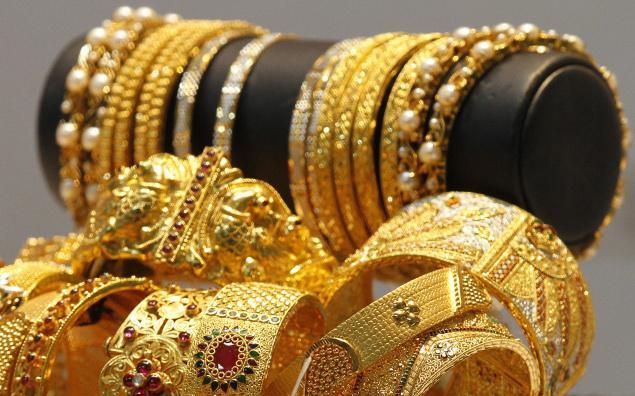
    There are several ways , one of which is the purchase of products such as jewelry made ​​of gold and ornaments , which can be used as an accessory for women and as an investment at the same time , however, there are a number of reservations about this method . First we need to know that the quality is measured by carat gold , and is the highest quality pure gold , which was given a measure of 24 -carat gold to the fact that the proportion of which exceed 99 per cent and up to 100 per cent.

    This high percentage of gold , can not be used in 24 -carat jewelry , nor in many products because of softer gold at this concentration , in spite of the high density of the metal. For the benefit of the scientific – even if they are in the field of chemistry that was not aware – equal to the density of gold 19.3 grams per centimeter per cube , ie, that the weight piece of gold in the form of a cube   1 centimeter is equal to 19.3 grams , and will not easily find any other material heavier than that , except material platinum , which are often priced higher than gold .

    Therefore, attempts to cheat in gold is very difficult because any other substance is added instead of gold would lead to a decrease in the weight piece is less than the correct weight . But for practical reasons , economic , uses 18-karat instead of 24 carats , which contains 75 per cent gold – come 75 per cent by dividing the 18 -carat to 24 carats – and add other materials to increase the hardness and color control , often materials copper or silver or rhodium or zinc and others. Even measuring 14 -carat gold is real , but the proportion of gold in which only 58.3 grams per cubic centimeter .

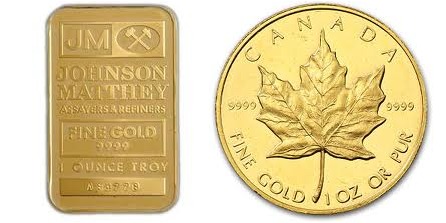
    Despite the ease of buying gold jewelery , but it is not the appropriate way to invest in gold for several reasons, including that the price of the golden piece depends on the design, implementation and other stones added , so there is no direct relationship and minutes between the price of an ounce of gold in the international markets and the price of products made of gold . For this reason, there are those who buy coins and molds gold comes in solid gold of 24 carat , a caliber used in the trading of gold , either through the spot market or futures , and then save them in a safe place in tanks banks or by specialized companies with the work of securing them

    However, the easiest way to buy gold is through investment funds specialized or even through the purchase of shares of ETFs , which is about the shares are bought and sold like the rest of the stock and do not differ from those in something , for example, shares GLD, which mimics the price of the price of an ounce of gold , equivalent to ten shares price from one ounce of gold . In spite of the popularity of this fund and the ease of trading , there are those who do not consider buying real gold , and differs from the actual possession of the molds gold or gold coins .

    The reason is that these funds may sell shares more than its gold , which at that rely on the idea that they have enough gold to meet redemption requests which are made on a daily basis , and it is expected to call for all investors their money at once, and this is true and expected but it is not guaranteed. The other option is to invest in gold is by buying shares of companies engaged in the exploration for gold , and there are specialized funds combine a number of these companies in one basket to reduce the risk of buying shares of one particular .

    In conclusion, there is still investing in gold means suitable for those who possess great wealth and wants to maintain them against the actions of central banks and the impact of inflation, it is possible to pass gold price bubbles financial result swung the purchasing power of the dollar, it is possible to speculate on gold prices, such as speculation on the stock, It is thus not without risk and the loss of a large part of the capital.

  • Gold falls 1% heading to record the biggest annual loss in 32 years

    Gold falls 1% heading to record the biggest annual loss in 32 years

    Gold falls 1% heading to record the biggest annual loss in 32 years

    The price of gold fell one percent on Monday amid thin trading due to the New Year’s holiday , heading for recording the largest annual loss in more than three decades, amounting to about 30 percent as it lost its luster because of the increasing risk appetite and expectations of a recovery global economic .

    European shares hovered near its highest level in five years after it posted strong gains over the two weeks after the arrival of Japanese stocks to their highest levels in six years .

    And went down the price of gold in online transactions to its lowest level in the session at 1200.79 dollars per ounce earlier . By 1038 GMT was down 0.9 percent at 1202.50 dollars.

    The price of gold fell U.S. contracts in futures for February delivery $ 12.30 to 1201.70 dollars an ounce .

    And puts the performance of gold in 2013 led to a rally lasted 12 consecutive years as prices fell after the U.S. central bank’s decision to reduce monetary stimulus program .

    And silver fell 1.9 percent to 19.65 dollars an ounce . And silver dropped 35 percent this year , the worst annual performance since at least 1982 .

    Platinum lost 0.9 percent to 1359 dollars per ounce to stop upward trend that lasted four consecutive sessions . Palladium fell 0.2 percent to 706.50 dollars an ounce

  • Gold stable but going to the biggest annual loss in 30 years

    Gold stable but going to the biggest annual loss in 30 years

    Gold stable but going to the biggest annual loss in 30 years
    Gold settled little changed on Thursday in thin trading end of the year , but in the process the largest annual loss in more than 30 years of his stock rise and optimism about the global economic recovery , which won its appeal as a safe haven .

    And influenced the concerns of this year to begin the Fed ( the U.S. central bank ) to reduce stimulus measures and the recent decision to proceed with the gold which is a hedging tool against inflation .

    And is approaching gold record loss of 30 percent in 2013 to end the rally lasted 12 years due to low interest rates and steps central banks around the world to support the economy .

    By the time 0724 GMT, gold was flat at 1204.70 dollars per ounce . The decline this year will be the largest gold since 1981, and the current price less 37 percent from the all-time high of $ 1920.30 recorded in 2011 .

    Analysts expect and traders continued decline in prices in the next year, but to a lesser degree .

    One trader said the precious metals market in Hong Kong, ” We may experience early next year, the level of one thousand dollars, but I do not expect prices to fall in the same class this year . Might happen some recovery starting from the middle of the year and on the basis of economic data . ”

    Silver settled unchanged at $ 19.5 an ounce .

    Platinum rose 0.7 percent to 1338.58 dollars an ounce and palladium rose to 695.5 for the same dollars

  • Gold ended higher but is moving towards recording the largest annual loss in 32 years

    Gold ended higher but is moving towards recording the largest annual loss in 32 years

    Gold ended higher but is moving towards recording the largest annual loss in 32 years

    Gold recovered from initial losses on Friday , which plunged him to the lowest level in six months , after receiving support from purchases to cover short positions , but still heading towards recording the largest annual loss in 32 years.

    The damage to the precious metal from the Federal Reserve’s decision to start reducing the extensive program for the purchase of assets and expectations decrease the deficit in the budget of the U.S. government .

    The U.S. central bank’s decision to the beginning of the end of an era of monetary easing helped gold to climb to its highest level ever at 1920.30 dollars per ounce in 2011 .

    And displays the precious metal – a tool traditionally a hedge against inflation – a strong selling pressure after reaching the U.S. Congress to agree to the budget of a two-year earlier this week , a deal that would ease the cuts automatically in spending and reduce the risk of government stops working.

    The price of gold fell to the cash sale earlier in the session to 1185.10 dollars an ounce , its lowest level since June and just shy of its weakest level in three and a half years in which his record June 28.

    But recovered later in the session to climb to 1202.56 dollars an ounce in late trading in the U.S. market supported by purchases to cover short positions and actual purchases .

    The futures closed the U.S. gold for February delivery high 10.10 dollars to 1203.70 dollars an ounce .

    And end the week, gold prices low and about 3 percent , down about 28 percent from its level at the beginning of the year. And moving toward ending the series yearly gains lasted 12 years.

    Among other precious metals , silver rose for immediate sale 0.8 percent to 19.39 dollars an ounce , while platinum jumped 1.1 percent to 1329.75 dollars an ounce and palladium rose 0.2 percent to $ 695 an ounce