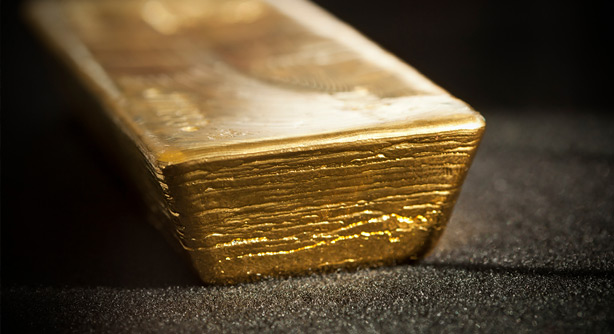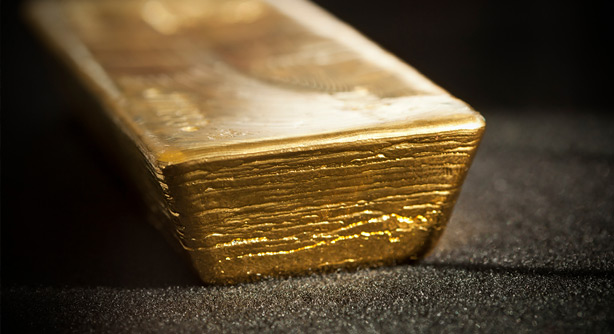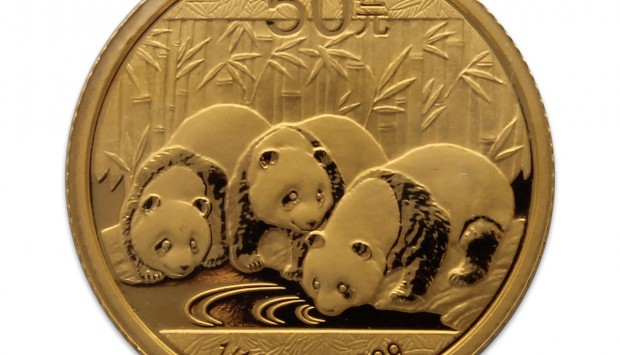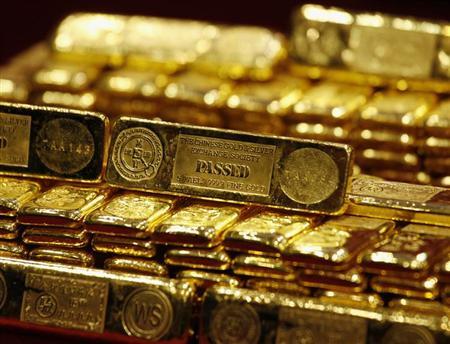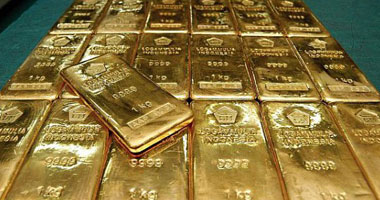
Gold rose on Monday, recovering from its lowest level in a week, which struck on Friday that the strong U.S. economic data reduced the metal’s appeal as a safe haven.
And still automatic spending cuts went into effect in the United States on Friday affect the price of gold in the spot market after led to his rise from the lowest level in more than a week.
One of the dealers said the Hong Kong Stock Exchange “the main theme in the market today is likely falling gold because of fears that spending cuts may just ideas, which says the decision makers spend way out of control and will continue to resort to this until it snaps recovery”
The data reflect a strong industrial in the United States along with strong numbers for car sales and improved consumer confidence in February for an improvement in the pace of growth of the economy reduced interest in gold.
And led the weak global markets in recent demand for gold in the market present in Asia, particularly China with the widening gap between domestic prices and world prices.
And at 10:25 GMT, spot gold price rose $ 4 for up to $ 1578.8 an ounce, recovering from its lowest level in a week, which struck on Friday at $ 1564.44.
The price of gold rose on April contract about $ 5 for up to 1577 dollars per ounce, after hitting the highest levels of the session at $ 1584.3.
And won the silver in online transactions 17 cents to 28.71 dollars per ounce to rise from the lowest level in more than 6 months at 27.94 dollars recorded in the previous session.
The price of platinum on April contract about $ 5 to record $ 1578.4 after moving between 1573.9 and $ 1585.1.
The profit rate palladium held May about two dollars to its highest levels since the morning session at $ 722.25 an ounce.
Author: Team Editors admin
-

Gold prices rise thanks to good purchases in Asian markets, but strong U.S. data limited the gains
-

Five mistakes to avoid with gold investment
This last week has seen gold drop below $1,600 and bounce back up again. Discussions of currency wars, negative interest rates and increasing uncertainties in Europe mean many are looking for a safe-haven and are turning to gold investment, particularly whilst the price is so low. In order to help those considering gold investment, myself and Will Bancroft have come up with the top mistakes to avoid with gold.
Whilst we believe gold bullion investment can play a vital role in modern portfolios, take a moment to consider what we think are some key pointers for investors ready to buy gold.
Don’t get over exposed
It is easy to over-allocate money to asset classes, and some gold investors can get a little carried away with how much exposure they have to gold. Asset allocation can indeed be subjective and highly personal according to our needs, but the reason we caution not to get too exposed to gold is because of the nature of how you might find gold itself.
Gold is indeed the antithesis of much of the modern financial system, and the way investors find gold might often be described as a gradual learning process with a few road to Damascus moments where we suddenly experience ‘revelations’.
After experiencing this learning process it is tempting to believe that the emperor has no clothes, and move to totally opt out of the contemporary financial system. However, take a moment to reflect here; until any potentially different future gold-centric financial system emerges, you need to be able to play on both sides of the fence.
Don’t over-leverage on gold
When you’ve discovered your new world view and are keen to load up on gold, it can be tempting to use leverage to increase your exposure, perhaps to use the free cash to do something elsewhere.
Whilst we are not saying leverage is never a good thing, individual investors appear less well served by it than professionals who sit in front of a screen all day and whose main occupation is trading. Gold can indeed be quite volatile, and it is very tempting to leverage up your exposure to then be ‘stopped-out’ when a price correction occurs.
If you don’t want to suddenly be scrambling to meet margin calls, and want to be able to hold your gold position through the ups and downs that are part and parcel of gold investing, go easy on the leverage.
This last 18 months performance is a classic example to heed. Gold majestically soared to >$1,900/ounce in September 2011 to then give back much of these gains in chops down and attempts to climb back. If you owned physical bullion without leverage this period was far easier to sit out than if you were leveraged and more exposed to any gold price drops.
Don’t buy unallocated gold
The word allocated is still not a familiar one, even to those heavily interested in the gold market. When you buy gold that is ‘allocated’ what it really means is that you are taking legal title of your gold investment at the point of sale. You buy gold that is your legal property.
In contrast to this many investors buy gold in ‘unallocated’ form. Most investors don’t realise the key difference between the two forms of ownership, and are mostly likely to be offered the unallocated version by their bank, broker or vendor.
Unallocated gold is a bit like a promise to gold, where your gold investment is dependent on your financial counterparty performing their obligation. If you are buying gold to isolate yourself from the financial system this might not be what you want. Why take the risk of your gold holding disappearing with the collapse of your broker/bank? MF Global was a recent reminder for investors here.
Given that you can buy gold in allocated form as easily as using an unallocated account with an investment bank or broker, it is not difficult for investors to gain legal title to their gold and enjoy greater security and control.
All bullion on The Real Asset Company’s platform is allocated to you at the point of sale.
Don’t just track the gold price in US Dollars
Often when you read market updates on the gold price, you will read the yellow metal is ‘up 2%’ or ‘fallen below its monthly high’, rarely do commentators specify which currency they’re pricing gold in, but 99% of the time it’s the US dollar.
This does make sense, after all the US dollar is the international reserve currency, and effectively replaced gold as such in the late 20th century.
However, gold’s price in dollars only matters if that is the currency you earn and save in. This year so far, gold is down by 3.6% against the US dollar, but when priced in British pounds gold is up by 3.6% and in the Japanese yen it is up by 2.0%.
Gold is a currency on its own, it is used as an alternative to other currencies and investors choose to compare its price alongside other national currencies. Therefore, it makes sense to compare it to alongside the money you earn in or choose to save in.
A few months ago we decided we would stop looking at the traditional gold price graph, and instead turn it literally upside down. When you do this you see the value of currencies priced in gold, as opposed to gold priced in currencies, and we found that currencies – whether dollars, euro, yen, pounds, renminbi or rupee have all lost a huge amount of value against gold in the last ten years.
If you look at gold priced in just one currency, over a short-term period then you will see very little. Looking at it across several currencies over the long-term then you will see the same trend; the declining value of paper currencies everywhere.
Don’t buy gold with short term aspirations
Once you’ve been inspired (or spooked!?) to buy gold, investors need to be ready for any price corrections that can occur, and have a healthy medium to long term outlook.
Don’t rush to buy gold in the hope of a 50% appreciation in the gold price in year one. Investing rarely works like this, and you need to focus first on long term preservation of capital when you buy gold online.
If you bought gold in August 2011 you might still be sitting on unrealised losses, but with a three to five years mind-set at the start you can let time work its magic for you as national currencies continue to be trashed by central bankers and the fundamentals behind the gold price reassert themselves.
If, like many, you buy gold bullion as protection form the structural problems within the financial system, don’t expect these problems to manifest themselves immediately with a ‘crack up boom’ in currencies like the dollar, euro and yen.
China, Russia and other emerged nations that have a role to play in over throwing the dollar based system of today, do indeed have a healthy respect for gold and monetary history. China increased their gold imports by 12.6% last year, whilst Russia’s central bank has imported more gold in the last decade than an other country.
However, these actors will not dictate the course of future financial history by themselves and black swans are more prone to appear than the human mind predicts.
Ultimately gold’s fundamentals will assert themselves. They are like unwritten laws of economic gravity, but very few can predict how quickly, how viciously and to whose benefit exactly.
Buy gold with a medium to longer term view, and you’ll be able to steadily ride the fascinating journey along the way. We find it helps us sleep a little better too.
-

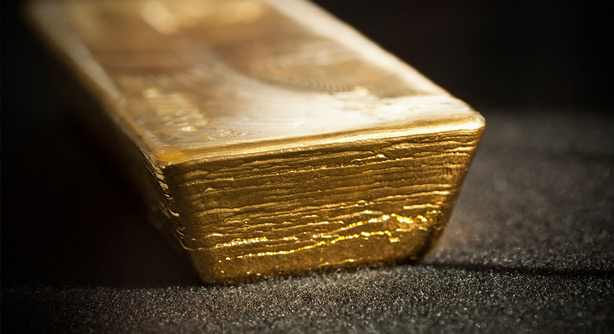
Gold manages to post weekly gain of Rs 120 per 10 gm
Both the precious metals, gold and silver remained under selling pressure during the past week on weak global trend while a fag-end buying by retailers at existing attractive levels pulled up the prices to settled with gains.
Traders said the metals, which had been traded lower for most of the week on lack of buying and weak global trend, attracted low level buying at the fag-end and settled higher.
In the national capital, gold of 99.9 and 99.5 percent purity commenced lower at Rs 29,900 and Rs 29,700 per 10 gm for want of support. Later, it met with buying and recovered to settle at Rs 30,180 and Rs 29,980 per 10 gm, showing a gain of Rs 120 each from previous week’s close.
The metal dipped below Rs 30,000 per 10 gm the last week, its lowest level since July 21, last year.
Sovereign followed suit and rose by Rs 100 to Rs 25,300 per piece of eight gram.
Similarly, silver ready started lower at Rs 53,750 per kg, before staging a strong comeback and close at Rs 55,250 per kg, showing a marginal rise of Rs 50.
Silver weekly-based delivery surged by Rs 1270 to close at Rs 54,925 per kg, after touching a low of Rs 53,160 per kg.
Silver coins spurted by Rs 2,000 to Rs 82,000 for buying and Rs 83,000 for selling of 100 pieces.
-

Gold snaps 2-day fall; rebounds by Rs 195 to Rs 30,180 per 10 gm
New Delhi: Snapping a two-day falling trend, gold and silver prices rebounded in the national capital Saturday on revival of buying by retailers and stockists at existing lower levels.
While gold gained by Rs 195 to Rs 30,180 per 10 gm, silver rose by Rs 500 to Rs 55,250 per kg on increased offtake by jewellery fabricators and industrial units.
Traders said revival of buying by retailers and stockists at existing lower levels after steep fall in previous few sessions mainly led the recovery.
On the domestic front, gold of 99.9 and 99.5 percent purity rebounded by Rs 195 each to Rs 30,180 and Rs 29,980 per 10 gm, respectively. The metal had lost Rs 345 in last two sessions. Sovereign continued to be asked around last level of Rs 25,300 per piece of eight gram in scattered deals.
In line with a general firm trend, silver ready recovered by Rs 500 to Rs 55,250 per kg and weekly-based delivery by Rs 1,765 to Rs 54,925 per kg on speculative buying. The white metal had lost Rs 850 in the previous two sessions.
On the other hand, silver coins held steady at Rs 82,000 for buying and Rs 83,000 for selling of 100 pieces.
-

Low gold price of $ 300 and the possibility of further decline
Finally gold investors began to feel a state of nervousness. After starting the yellow metal in the trip a decade-long rise, returned this week fell to its lowest level since July last year, down more than $ 300 from a record of more than $ 1,900 per ounce in 2011.
The cause pledged Mario Draghi, President of the European Central Bank, to do” whatever it takes” to protect the euro undermine the precious metals over the past year.
Because the mood among investors continued to improve during 2013, a gold dealers in mind something else, is the possibility that eliminates the global economic recovery need to the role of the central bank, which boosted the recent rise in metal.
Gold was at 1579 dollars yesterday, after touching a low of $ 1554.49 in early trading
Says Daniel Pripnar, head of metals research at Deutsche Bank:” If we are now looking for sustainable position in the United States without super adapt monetary policy, it is certain that the role of gold in doubt from the structural perspective”.
He adds:” If this is the case, it is possible to say that the long-term course in the gold market during the period from 2001 to the present, it is very likely that up to a turning point”.
On the surface, there are a lot of reasons for nervous about the prospects for gold. Global stocks have risen strongly this year, and the flow of funds data shows that investors have begun to rotate assets which are considered havens in high-risk areas in the markets. Specifically, this is bad news for gold, which unlike bonds, do not provide any benefit.
He noted the minutes of the meetings of the Fed on monetary policy, which was released on Wednesday, a rise in asset prices, and suggested to calm the U.S. central bank’s appetite for open-ended asset purchases.
During the financial crisis followed by the performance of gold rise in the budget of the Federal Reserve Bank. And the possibility of the central bank early exit from emergency measures to pay gold to its lowest level in nine months.
In recent weeks, also strengthen the dollar at the expense of gold, which is priced in the U.S. currency.
He says John Bergthel, metals and mining analyst at Citigroup:” For many years gold benefited from the role as a guarantor against systemic risk, and has benefited from its relationship negative against the dollar”.
He adds:” no longer any of these factors is an advantage, so for the first time since the period we have to look at supply and demand and the right to ask about the extent to which can be up to him decline”.
Given the behavior of investors recently, there are other reasons for concern about the strength of the recent rise in prices. Valhmas of gold during the financial crisis coincided with the growing use of ETFs to get easy access to asset categories and criteria.
As a result, have been retained by more than two thousand tons of gold in the form of ingots with ETFs, and mainly by investors who have used the funds to hedge against inflation.
And says Bergthel:” This is the first time that forced the asset class of commodities to consider the accounts of this kind”. He adds:” There is a possibility that is flooding the market with metal if investors came out of those funds”.
But the source of physical demand for gold can be changed simply. The Government of India, which is one of the largest sources of demand for gold in the world, trying to stifle the demand to reduce the growing deficit in the current account. But demand in emerging markets in general remained strong during the financial crisis.
While the Chinese economy matures and more middle class consumption of luxury goods, is expected to increase the demand for gold in the country.
Also emerged as central banks in emerging markets buyer of gold dramatically in recent years as a way to hedge against the risk of inflation, which undermined the value of the dollar in reserves.
As Pripnar says” in the margin was the western financial investor is the most important contributor to the demand for gold in recent years, but this is now changing. ‘
For many investors, premature to say the end of the gold rally. The optimists based weakness of the global economic recovery and the prospects for the central banks are not, especially the Federal Reserve, able to resist further monetary easing.
And says Pripnar:” We have seen in the past that if there is any pass for any of the indicators that improved, the Fed remains there, which would be good for gold. ‘
Supporters argue others alloys that a large outflow of investment funds traded material is unlikely. With interest rates at historic lows, yet there are few signs so far to change the course of major central banks, the opportunity cost of holding gold for cash remains low.
Jake says Greenberg, a metals and mining analyst at” Jefferies”:” until we see higher interest rates (…) investors will not feel that they are forced to sell their properties of gold is low, so we believe that the price of gold should recover from levels Current this year”.
-

Gold down and accept weekly loss due to economic optimism
Gold fell on Friday, coming on the second consecutive weekly loss, as signs of improved steadily in the future vision of the U.S. economy and signs that the Federal Reserve might end his stimulus program prompted investors to buy assets involving risky equities.
With the absence of U.S. economic data on Friday, investors in the metal trimmed their positions before the end of the week where he absorbed the minutes of a meeting of the monetary policy committee of the Federal Reserve in January, which pointed out that the stimulus measures might end sooner than expected.
The gains in U.S. stocks made of gold, a traditional safe haven, less popular. Raising the benchmark S & P index gained 6% so far this year and was able to stabilize above the level of 1500 points, despite weakness this week.
Gold fell for instant transactions increased by 0.2% to 1,573 dollars an ounce at 16:36 GMT, coming on a weekly decline by more than 2%.
And U.S. futures dropped April delivery 5.70 dollars to 1,572 dollars, with trading volume accept the termination without an average of 250 days.
And still fragile confidence in gold after the metal back down to the lowest level in 7 months at 1,554 dollars on Thursday after the Monetary Policy Meeting Minutes of the Federal Reserve and rumors of forced liquidation of commodities tripped Fund earlier this week. -

European stocks fall at the beginning of the meeting and attention on the minutes of the meeting of the Central American
European stocks fell in early trading Wednesday after strong gains in the previous session, trying to absorb the results of the weak, while dealers pointed to the case of cautious ahead of the release of the minutes of the meeting of the Central American Bank for the month of January.
Shares in Lufthansa the largest German airline 2.4% after announcing plans to suspend dividends while net profit amounted to 990 million euros (1.32 billion dollars) in 2012.
At 8:10 GMT, FTSEurofirst 300 index fell by 0.2% to 1168 points, after jumping 1.1% on Tuesday, supported by a strong statement of confidence in the German economy.
Said Michael Hewson, an analyst at CMC Markets, “I do not see what prevents us from maintaining the gains and may rise. Believe that the policy of the central bank will remain soft.”
“I think that the only downside probability is more stringent language of some members of the Federal Reserve Board regarding Term quantitative easing”
The Fed issued U.S. Proceedings of the meeting of the Monetary Policy Committee after the European markets closed.
In early trading the European markets, both fell from the German DAX Index and the French CAC 0.1% and lost the Italian Vtsa 0.2% while the Spanish index rose Apex 0.1%.
-
Dubai Investment instruments issued bonds value one billion dirhams
Issued Dubai Investments instruments bonds value one billion dirhams over three weeks, and an interest rate of less than five percent, for a period of five years.
Funds tend instruments will be collected by the end of April a maximum payment of financial commitments worth 600 million dirhams to reduce the amount of interest paid by the company, and will direct the remaining part of the expansion and investment opportunities.
The company is currently working to exit from projects with a total value of up to 550 million dirhams, where double the exit process that took place during the year, the company’s profits three times during 2013.
And detailed managing director and chief executive officer of the company Khalid Kalban during a meeting press at the company headquarters yesterday, made Dubai Investments profits to 320.6 million dirhams in the past year 2012, up 58 percent from what we have achieved through its predecessor in 2011, and by paying the support of corporate performance from hand, and exits carried out by the company during the last year.
Kalban added that growth was expected, though the gains achieved after setting aside allowances ranging between 85 and 100 million dirhams.
He pointed out that the company’s revenue in 2012 exceeded 2.63 billion dirhams, thanks to the use of thoughtful and effective management methods of acquisitions and the establishment of and enter into strategic partnerships in the region.
And expected to be positive this year, and moving the company to expand in some of its units during the year, and work to seize the opportunities available in the markets of the region.
He also spoke about the company’s intention to obtain financial facilities through the issuance of sukuk worth billion dirhams, will be in three weeks from now, where is the completion of the preparation and selection of the bank, which manages the deal this week, pointing out that the duration of instruments will be for five years, at an interest rate of less than five percent.
He pointed out that the aim of this proposal will meet some of the obligations and directing the other part of the expansion and possible investment opportunities and acquisitions.
He explained that the proposal will contribute to the reduction of benefits currently paid to financial obligations, pointing out that it is about 600 million dirhams will be paid through funds instruments that will be collected at the end of the month of April at the latest.
He added that they are paying nearly 200 million dirhams every year to the banks, and therefore These payments will stop and replace instruments billion dirhams paid on the fifth year.
As for the topic of exit, said Kalban been out of the three projects worth 200 million dirhams in 2012, one of Al Arif, referring to the company’s intention to exit from two other projects during the year.
He said that the exit of these two projects will achieve revenues in the range of 400 to 450 million dirhams from one, and the other in the range of 75 to 80 million dirhams, including conveying the size of projects to between 500 and 550 million dirhams