Category: Gold in Dubai

  • Dubai spot gold contract to help meet traders hedging needs

    Dubai spot gold contract to help meet traders hedging needs

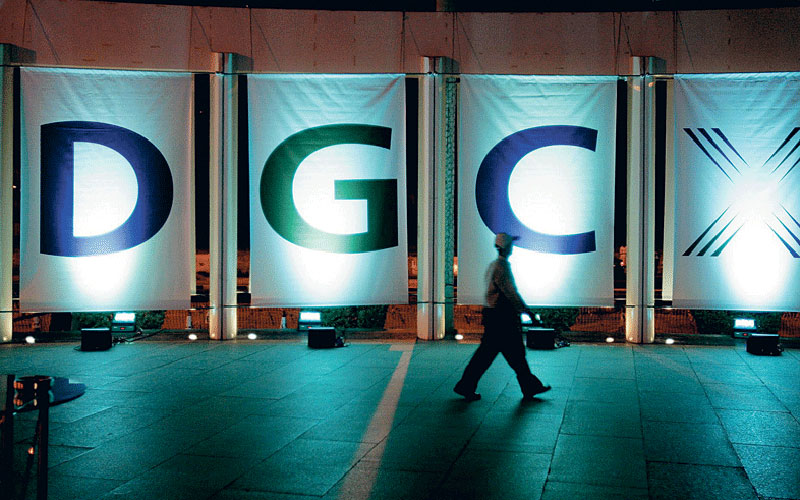
    Dubai: The Dubai Spot gold contract is likely to support the hedging needs of gold traders in a destination that is home to 40 per cent of the world’s physical gold trade.

    UAE investors will be able to buy and sell physical gold on a transparent, regulated domestic exchange. The Dubai Gold and Commodities Exchange (DGCX) has designed the spot gold contract taking into account the specific needs of market participants. The exchange has been in consultations with Dubai gold market players and realised that there is considerable demand for a regulated exchange-traded Dubai priced spot gold product not only locally but also in the world’s other large gold markets.

    The contract will play an important role in enhancing trading efficiencies as well as market depth and liquidity. The contract will allow bullion traders to be able to do netting, that is, be able to square opposing trade long or short positions when done both on-exchanges, which is not possible when dealing with two different parties.

    The value of gold traded through Dubai stood at $75 billion in 2013, representing 40 per cent of the world’s physical gold trade. Dubai is expected to be ranked second after London in terms of gold trade.

    Dubai is strategically located amid a large consumer market, and well positioned to channel gold from the international market to consumers like India and China, which controls the majority of the world’s consumption.

    “Dubai is at the centre of trade flows of major metals including gold, silver, platinum, palladium and rhodium, which are routed through Dubai from their source market of Africa to their eventual destinations,” Ian Wright, Chief Business Officer of DGCX, told Gulf News.

    By 2020, when Dubai is expected to attract 20 million visitors per year, the gold traded through Dubai is expected to increase further.

    Shift in volumes?

    “There will be shift in volumes. There will be more volumes taking place in local spot markets in Dubai, and we will see the daily cycle going from Shanghai, Dubai, Istanbul and New York. London will be there as a lot of central banks still have gold holdings there. A lot of central banks in the past 1-2 years, have repatriate gold, that will take some of the gold away,” Gerhard Max Schubert, first vice president head of gold and commodities, Arab Banking Corporation told Gulf News.

    London is the by far the biggest OTC (Over the Counter) clearer because a lot of OTC business is done depending on the price finding in New York, but it is cleared OTC in London.

    Currently, the exchange records a daily turnover of $1.4-1.5 billion per day in USD-INR contracts, which is a major cash cow. DGCX’s biggest segment are currencies, equities, precious metals, and hydro carbons.

    source: gulfnews
  • Dubai , Gold  Saudi Investors Destination To Face Labor Shortages

    Dubai , Gold Saudi Investors Destination To Face Labor Shortages

    Gold Saudi investors facing a lack of labor in their factories to resort to them to set up factories in Dubai beneficiaries of not imposing customs duties on gold factory in the Gulf states.

    The activity of several gold plants become dependent, because of the lack of investors for a sufficient number of visas for Indian labor under conditions laid down by the Ministry of Labour; states not to Indian employment rate exceeds 40 percent of the total labor required, pointing out that some of them began to move their factories to Dubai, where they can get the facilities and greater flexibility for the exercise of their activity, was quoted as saying “the economic newspaper.”

    While another investor in the field of gold in the eastern region, said that a large part of the gold jewelery that carry either sign a Gulf industry “gold UAE or Bahrain,” a returning investments to Saudi investors have industrial factories and workshops exist in those countries. He pointed out that this would hurt the gold industry locally, calling on the authorities concerned to address this situation and motivate investors to return their investments to the country and take advantage of it to build a strong national reputation of the industry in the field of gold.

    Furthermore, Abdul Ghani Al-Muhanna; Chairman of the gold and jewelry in the eastern room, if there investors have already transferred their factories to the Gulf states, especially to Dubai, having faced the difficulty of obtaining the number of visas for Indian labor, compared to facilities and flexible procedures and found in Dubai, including the said manpower from India in addition to the presence of large numbers of these workers operate there.

    Muhanna pointed out that these privileges which he found Saudi investors in Dubai, prompted investors to work there, while the rest think also to move to there, to their inability to meet the required Saudization rates, especially that there is no desire for the Saudis to work in these crafts.

    He pointed out that Saudi investors in Dubai who have set up factories there, retain their share in the domestic market through the export of products, factories, and in particular that there is a cooperation agreement between the Gulf states not to impose customs duties for any product is manufactured in the Gulf states.

    Muhanna believes that Saudi investors geared towards Dubai is a negative aspect, indicating that it was supposed that these products become the Saudi industry, but as long as these plants exist in other countries, it is the industry back to this country.

    He pointed out that local factories need to be 95% of craft workers, while the remainder represents the administrative and service labor activity complementary to the gold factories, and this can be provided from any nationalities.
    He revealed Muhanna the presence of Pakistani labor controls 80 percent of the activity of the workshops, and the self-employed, what benefits there are operations of commercial cover and clear of and behind these workshops and some factories, and thus we find fraud and fraud in the activity of workshops manufacturing, both in caliber gold or quality.

  • Today’s Gold Price Dubai

    Today’s Gold Price Dubai

    Gold prices achieved yesterday, a new high between DH 4.5 and seven dirhams per gram for gold carats in Dubai , compared to the price end of the previous week, according to published rates in Dubai and Sharjah, with the total increase was in the yellow metal prices over the past three weeks, more than AED 13 gram.

    Dubai Gold Souk experiencing during the current period, a sharp slowing in sales following a significant increase recorded by gold prices recently, and contributed to the decline in demand for gold jewelry and bullion, coins, pointing out that the prices that reached gold is considered attractive to customers, whether on the level local, or even for tourists, which is reflected negatively on the sales outlets, Said Officials Outlets

    1 gram gold price in dubai for 24 carat AED 156.5 an increase of seven dirhams compared to the end of last week, while the price of gram total of 22 carat, AED 148.25, an increase amounting to 6.5 dirhams, while arrived price gram of 21 carats to 142 dirhams, up value of 6.25 dirhams, while the price of gram of 18 carat AED 122, an increase of 4.5 dirhams.

    For his part, director of sales, said in place of «Ashoka Jewelry», Gimon Sriak, that

    The continuing rise in the price of gold for the third consecutive week, recording an increase by a large margin, impacted negatively on the gold market, which is currently experiencing a sharp slowing in demand dealers indicators», referring to «limited sales movement on some weight goldsmiths little ».said Gimon Sriak

    The market is witnessing a significant decline in demand for bullion and gold coins», indicating that «the significant increase in the price of gold trimmed of tourists, which was based upon some shops in its sales volume significantly».

    The price of gold record over the past three weeks, a significant increase shares in a state of severe slow sales, as reflected in the reluctance of dealers for the purchase, in addition to a decline in purchasing movement of regiments tourist, to the fact that Price rates are high compared to the past three months, especially with the fact that the increases reached last week to seven dirhams » Said Dilip Dhecan

  • 14% growth in gold trading on the Dubai (DGCX) last month

    14% growth in gold trading on the Dubai (DGCX) last month

    Gold rose in trading Dubai Gold and Commodities (DGCX), for up to 41 945 contracts in December 2014 registered a remarkable growth rate of 14% compared to the same period of 2013. Trading volumes also seen in the stock market last grew by 25% compared to the same period of the previous year, registering a trading contract worth 962 438 84 27 billion US dollars. Daily turnover rate grew by 19% on an annual basis for up to 45 830 contracts in December 2014.

    Currency and formed the main engine of growth in trading volumes on an annual basis, where the number of currencies traded in December last decades amounted to 897.116 contract growth rate of 25% compared to December 2013. And recorded the Indian rupee futures third highest rate of interest open daily during the month of December, a growth of 21%. And saw precious metals traded on the Dubai Gold Exchange and commodities grew by 16% on an annual basis

  • UAE Beats India in gold consumption

    UAE Beats India in gold consumption

    The UAE ranks the first place worldwide in per capita consumption of gold, superior to the ancient countries such as India, in a new indicator on the strength of the State economy, according to Emirates today.

    “Gold Group” of the Chamber of Commerce and Industry of Abu Dhabi, the expectation that prices are gold in the state decline during the next six months, revealing that sales of gold jewelry in Abu Dhabi, exceeded six billion dirhams during the first eight months of this year, and it is expected sales to exceed nine billion dirhams at the end of the year.

    “the average per capita consumption in the Emirates of gold reached 30 grams per year, compared to just one gram per capita in India, for example,” noting that “this is a sign of the strength of the economy is growing, and high levels of living in the state. ” Said Abdul Wahid Al Marzouki the secretary “Gold Group”

  • Gold rate no more factor to buy jewellery in Dubai

    Gold rate no more factor to buy jewellery in Dubai

    The price of gold is no more a major factor when UAE residents are buying jewellery, Dubai gold souq merchants told Emirates 24|7.

    “The gold rate does not have an effect on demand. People buy gold whenever they need it,” says Ahmed Abdul Aziz, Manager of Tilesh Jewellery.

    “No one puts any effort into finding the rate of gold prior to visiting the gold shop,” he pointed out.

    He added that his clients consist almost entirely of Emiratis.

    Atul Jewellery sales representative, Sanjith Thekkedh, agreed.

    He also said that the gold rate did not have much of an effect on their sales.

    “The rate was Dh147 per gramme before the Eid season and Dh150 during the season.

    “Although our Eid sales had risen, the difference [increase] of Dh3 [per gramme] did not have an impact on that,” he said.

    For example, on a sale of 10 grammes, the increase comes to just Dh30.

    Summer sales at Dubai’s gold souq were down 25 per cent – as some merchants reported – but Eid Al Fitr helped bring some sparkle and shine to the market.

    Before and during Eid Al Fitr, higher demand led to significant sales, said Jenny Buabo, a Damas Jewellery sales representative.

    “This year’s Eid sales rose by 15 per cent – while last year’s sales showed around 32 per cent growth,” Buabo said.

    Shanky Bansel, a Pure Gold Jewellery Sales Representative said their sales had also risen during the Eid season. His clients range from expats to citizens.

    For some gold souq merchants the Eid sales euphoria has lingered.

    Dharmendra Jewellery Sales Representative, Hatish Josh, said after the Eid season, there was a “very good” sales growth of 5–10 per cent.

    He said the gold rate was higher this Eid season, and therefore the demand was low.

    He said. “[But for us] the demand was surprisingly still better than last year’s,” Josh said.

    Manager of Tilesh Jewellery, Ahmed Abdul Aziz said: “We did much better this Eid season than this summer, when we saw a steep of decline of 25 per cent in sales.”

    Compared to last year’s Eid season, “we did slightly better on sales,” he said.

    Generally, the gold rate in Dubai is around Dh150 per gramme. The selling price varies from Dh10–15 because of jewellery making charges.

    SOURCE: Emirates 24|7

  • Gold and diamonds head up UAE imports

    Gold and diamonds head up UAE imports

    TheNationalUAE

    Gold and diamonds were among the most popular imports into the UAE in the first three months of the year, with the country’s consumers buying about 200,000 kilograms of the materials, valued at around Dh37.9 billion, according to data from the Federal Customs Authority.

    Cars took second place, with Dh12.4 billion purchased in the first quarter, as the UAE’s consumers took advantage of the low yen to buy Japanese cars.

    The UAE’s total non-oil trade reached Dh256bn in the first quarter of this year, down slightly compared to the first quarter of 2013, when Dh270bn of trade was recorded.

    The UAE ran a deficit in terms of its non-oil trade in the three months to March, spending Dh166.4bn on imports, compared to receipts of Dh89.6bn from exports and re-exports combined.

    The balance of non-oil trade is watched closely by the UAE Government, which aims to diversify away from oil to ensure economic growth and current account surpluses in the future.

    The Australasia and Asia-Pacific region remained the UAE’s largest trade partner, accounting for 43 per cent of the country’s non-oil trade, worth Dh106bn.

    European trade grew by 3 per cent compared to the previous year, accounting for 27 per cent of total trade, and was valued at Dh67.2bn. Trade with the Middle East and North Africa accounted for 14 per cent, or Dh35.1bn.

    The US and Caribbean accounted for 10 per cent of quarterly non-oil trade, valued at Dh24.1bn, followed by West and Central Africa, which accounted for 4 per cent of trade, and East and South Africa, which accounted for 3 per cent.

    The value of non-oil trade between the UAE and GCC reached Dh22.9bn in the first three months, with imports from the GCC accounting for Dh7.4bn, while exports and re-exports totalled Dh15.4bn.

    Saudi Arabia was the UAE’s largest non-oil trade partner in the Middle East. Total value of the UAE-Saudi non-oil trade totalled Dh8.3bn, accounting for 36.2 per cent of total trade with GCC countries.

    Oman was the UAE’s second-largest trade partner in the Gulf with Dh6bn, or 24.6 per cent of Gulf trade, followed by Kuwait and Qatar, both valued at Dh3.2bn.

    In 2013, total trade between the UAE and the rest of the world totalled Dh 1.53 trillion.

  • Gold demand in the UAE declined 27% to 2.43 tons in 6 months

    Gold demand in the UAE declined 27% to 2.43 tons in 6 months

    Decline in demand for gold in the UAE by about 27% in the first half of this year to reach 2.43 tons, compared with 1.48 tons in the first half of last year. The data showed the World Gold Council that the value of the demand for the precious metal fell in the first half of this year by about 23% to 8.1 billion dollars, compared to about 34.2 billion dollars in the first half of last year.

    Decline in demand for gold in the UAE by about 32% in the second quarter of this year to 8.17 tons, compared with 1.26 tons in the second quarter 2013. The record jewelery demand decline parallel to 5.14 tons, as well as the decline in demand for bullion and gold coins by 32% as well to 3.3 tons.

    World Gold Council data showed for the movement of gold demand worldwide in the second quarter of 2014, the value of gold demand in the country fell during the second quarter of this year by about 38% to drop to 737 million dollars, compared with 19.1 billion dollars in the second quarter 2013

    Drop of Value of jewelery and gold to 38% to fall to 601 million versus $ 964 million dollars in the second quarter of last year, and the decline in investment demand for bullion and gold coins for itself to 137 million versus $ 222 million dollars in the second quarter 2013. The report showed that demand for gold in the UAE dropped by about 1% in the year ended with the end of the second quarter of this year, up to 8.72 tons, compared to 3.73 tons for the year ended in June 2013.

    The decline in demand for bullion and gold coins in the year ended in June 2014 by about 7% to 5.13 tons, while the record demand for jewelry during the same period grew by 1%, rising to 3.95 tons, compared with 8.58 tons in the year ended in June 2013.

    In terms of value arrived decline in the value of gold demand in the state during the year ending in June 2014 to 18%, up to the value of demand to 03.3 billion dollars against 71.3 billion dollars in the year ended in June 2013.

    The value of the demand for gold jewelery in the same period by 17% to 47.2 billion dollars against 97.2 billion dollars in the year ended in June 2013. As well as the decreased value of the demand for bullion and gold coins by 24% to $ 563 million, compared to $ 736 million during the year ended in June 2013.

  • Gold Price In Dubai Today Slip DH 4 Per Gram

    Gold Price In Dubai Today Slip DH 4 Per Gram

    Gold prices dropped due to profit-taking after jumping 1.5 percent in the previous session after the downing of a passenger in the Malaysian eastern Ukraine, but traders said the demand for buying the precious metal will be renewed quickly if political tensions escalated.

    Gold is seen as a tool to hedge risk at the time of political unrest, and record the precious metal, on Thursday, the largest increase for one day in the month after the plane crash that Ukrainian official said that as a result rocket fired by armed supporters of Russia.

    The accident risk increases sharply in the conflict between Kiev and rebel supporters of Russia, and exacerbating tensions between Russia and the West.

    The decline in the price of gold for immediate sale Friday 0.6 percent to 1310.15 dollars an ounce in late trading in the U.S. market influenced by the rise of the dollar and the prospect of an increase in U.S. interest rates sooner than expected.

    The futures fell U.S. $ 7.50 for gold settled at a record of $ 1309.87 an ounce.

    The price of gold jumped to 1392 dollars in late March during the height of the conflict between Ukraine and the pro-Russian forces in the Crimea, but the yellow metal has failed to continue to climb in spite of the conflict in eastern Ukraine and the escalation of tensions in the Middle East.

    Among other precious metals fell Platinum 0.6 percent to 1484.50 dollars an ounce, while palladium fell 0.3 percent to 878.25 dollars an ounce, but it remains near its highest level since 2001 after the United States imposed more severe sanctions yet on Russia – the largest producer of the metal – due to violence in Ukraine.

    Silver fell 1.1 percent to 20.83 dollars an ounce after it posted in the previous session, a gain of about 2 percent.

  • UAE Gold Prices Edge Up

    UAE Gold Prices Edge Up

    Gold prices rose Wednesday, with continued flows into the largest fund in the world to invest in the yellow metal for a second day.

    This comes at a time when markets are watching the minutes of a meeting of the monetary policy committee of the Federal Reserve in June for guidance on expectations the U.S. central bank for the economy and interest rates.

    The price of spot gold 0.2 percent to 1323.61 dollars an ounce.

    And deliver a demand for the yellow metal in support of violence in parts of the Middle East and Ukraine, and is often seen gold as a safe investment vehicle compared to assets that involve greater risk, such as stocks.

    Rising metal prices

    As prices continued to climb for palladium thirteenth session, on Wednesday, to remain near their highest level since 2001, with support from worries about supplies from South Africa, and strong demand from the automotive industry.

    And received the platinum group metals prices a boost this year because of the strike lasted five months in the mines of South Africa, a major producer.

    Although the strike ended last month, but supplies are still concerns about the impact on the markets, according to the news agency Reuters.

    The price of palladium rose Spot 0.4 percent to 870.75 dollars per ounce by the time 0505 GMT, after the previous session’s record of $ 873.75, the highest level in 13 years.

    He received palladium, which is used primarily in the automotive industry on a batch of data last week showed that auto sales in the United States in June, the highest level recorded in eight years.

    Platinum rose 0.7 percent to 1496.35 dollars an ounce.